Find High Precision T Punch Suppliers for Automotive, Appliances, and Hardware
Source 30 verified listings for high precision t punch machines featuring hydraulic or pneumatic power, CNC or artificial control, and single or double action sliders. Buyers can compare specifications like stroke, tonnage, and material compatibility from manufacturers in China.
Key considerations
Products List


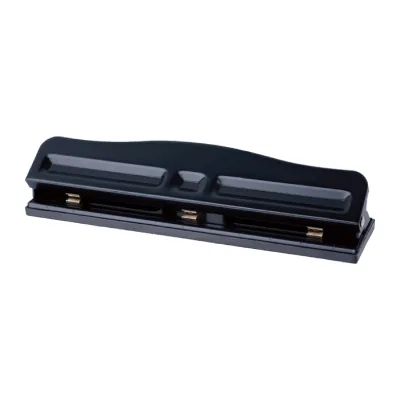


$3000.00 - $5000.00
Moq: 1


Comprehensive Sourcing Guide
Strategic Sourcing Guide for High Precision T Punch Solutions
Procuring high precision T punch tools and associated machinery requires a rigorous approach that balances technical specifications with compliance verification. The market for these components is diverse, ranging from semi-open punch configurations to closed punch systems, each serving distinct manufacturing needs. Buyers must navigate a landscape where attributes such as slider drive mechanisms, controlling modes, and material compositions vary significantly between suppliers. This guide provides a structured framework for evaluating potential suppliers and products, ensuring that the final procurement decision aligns with operational requirements and quality standards.
Technical Specifications and Machine Configuration
The foundation of a successful procurement strategy lies in understanding the specific technical configurations of the equipment. In the current market, high precision T punch solutions are often integrated into larger punching machines that define the operational envelope. Buyers should first distinguish between different slider drive mechanisms, as the choice between a crank press and a cam press fundamentally alters the machine's speed and force profile. For instance, some units utilize a crank press mechanism, which is often paired with hydraulic pressure power sources, while others employ a cam press, typically associated with double-action slider movements.
The controlling mode is another critical differentiator. While some high-speed punching machines operate under artificial control, offering a manual or semi-automated workflow, advanced systems feature CNC controlling modes. This distinction is vital for applications requiring complex, repeatable patterns. Furthermore, the precision of the operation is a primary concern; specifications such as "High Precision" and adherence to standards like "GB 1 Class" indicate the tolerance levels a machine can maintain. The stroke length, observed in specific models as 30 mm, and the capacity, which can range up to 45 tons, must be matched to the specific material thickness and volume of the production run.
When evaluating the punch itself, the shape is a decisive factor. The market offers both semi-open and closed punch shapes. A semi-open punch may be suitable for specific material feeds, whereas a closed punch design often provides better containment and stability for high-volume operations. Additionally, the knife type, such as round knives, and the material of the tool, which can be solid carbide or steel, directly impacts the lifespan and cutting quality. Buyers must verify if the machine supports one-time molding or if it requires multiple steps, as this affects the efficiency of the production line.
Compliance, Certification, and Standard Verification
In the realm of industrial machinery, compliance is not merely a formality but a prerequisite for market access and operational safety. The supply chain for high precision T punch solutions is heavily influenced by certification standards. Buyers should expect to encounter products that carry CE certification, which is a common standard observed in the market. However, the presence of a CE mark alone should not be the sole criterion for selection. It is equally important to verify if the product holds ISO certification, as some listings indicate a combination of CE and ISO standards.
The standard of the product itself varies. While some items explicitly state a standard of "CE," others may list "Depends" or reference specific working area dimensions as their primary standard. This variability necessitates a proactive verification process. Buyers must request documentation that confirms the product meets the specific regulatory requirements of their target market. For example, a machine originating from China, a common source for these tools, must still adhere to the safety and performance standards of the importing country.
Furthermore, the certification status should be cross-referenced with the product's condition. Listings often specify that the product is "New," but the certification should be valid for the specific model and configuration. Some suppliers may offer certifications like SGS alongside CE and ISO, providing an additional layer of third-party validation. It is crucial to understand that "Certification: ISO Condition:New" implies a specific state of the product at the time of certification, and this status should be confirmed before finalizing any purchase. The absence of a specific standard on a listing should trigger a request for clarification rather than an assumption of compliance.
Cost Drivers and Pricing Dynamics
The pricing structure for high precision T punch solutions is highly variable, reflecting the complexity of the machinery and the materials involved. The observed price range in the market spans from $0.10 to $108,000, a disparity that underscores the difference between individual punch components and complete high-speed punching machines. A buyer must carefully distinguish between the cost of a single tool, such as a solid carbide punch, and the cost of a full system, which includes the hydraulic pressure unit, the slider mechanism, and the control system.
Several factors drive these costs. The material composition is a primary driver; tools made from solid carbide generally command a higher price than those made from standard steel due to superior wear resistance and longevity. The level of automation also influences cost; CNC-controlled machines with double-action sliders and high precision capabilities will be significantly more expensive than manually controlled, single-action units. Additionally, the customization options available, such as OEM customization for any size or specific working areas, add to the overall cost.
The Minimum Order Quantity (MOQ) is another critical cost driver. The market shows an MOQ range from 1 to 10,000 units. For buyers seeking to test a new supplier or for small-scale production runs, an MOQ of 1 is advantageous. However, for large-scale manufacturing, negotiating an MOQ closer to the higher end of the range may result in better unit economics. Buyers should also consider the packaging costs, as options range from simple bags to wooden boxes or wooden cases, which can impact the total landed cost, especially for international shipping.
Typical Applications and Industry Use Cases
High precision T punch solutions are versatile tools deployed across a wide array of industries. The application scope is broad, ranging from automotive manufacturing to household appliance production. Specific use cases include the making of flat washers, which is a common application for high-speed punching machines. The machinery is also utilized in the forging of automotive half-shafts, demonstrating its capability in heavy-duty forming operations.
The versatility of these tools is further highlighted by their application in the electronic and hardware sectors. Whether for commodity goods or home use, the ability to process non-ferrous metals and steel with high precision is essential. The "Long Axis Type" craftwork mentioned in some specifications suggests specialized applications where axial symmetry is critical. Buyers should evaluate whether the machine's stroke, capacity, and slider movement align with their specific product requirements. For instance, a machine with a 45-ton capacity and a 30 mm stroke is well-suited for heavy-duty tasks, while a lighter unit might be more appropriate for delicate electronic components.
Supplier Evaluation and Operational Capabilities
Evaluating a supplier requires a deep dive into their operational capabilities and product consistency. The origin of the product, often listed as China or specific cities like Shanghai, provides context but does not guarantee quality. Buyers must assess the supplier's ability to provide consistent product attributes, such as the "High Precision" claim and the "New" condition of the machinery. The presence of a warranty, such as a 12-month coverage, is a positive indicator of supplier confidence, but the terms of this warranty must be clearly understood.
The customization capabilities of the supplier are also a key evaluation metric. Some suppliers offer "Available" customization, allowing for tailored solutions, while others list "Non-Customized" options. Buyers should determine their flexibility needs early in the process. Additionally, the supplier's ability to provide detailed specifications, such as the working area dimensions (e.g., 1200x800mm) and the specific model numbers (e.g., RB, APB 45, MFCE-P-601-900x600), is essential for ensuring compatibility with existing production lines.
Quality Control and Long-Term Procurement
Quality control is paramount when sourcing high precision tools. The observed attributes, such as "One-time Molding" and specific material grades, must be verified through rigorous testing. Buyers should request test results or certification reports that confirm the product meets the claimed precision levels. The "GB 1 Class" precision standard is a specific benchmark that should be validated against the actual performance of the machine.
Long-term procurement considerations extend beyond the initial purchase. The availability of spare parts, the longevity of the tooling, and the ease of maintenance are critical factors. The "12 Months" warranty period is a starting point, but buyers should inquire about the availability of after-sales support and the supplier's track record for handling warranty claims. The packaging, whether it is a wooden box, wooden case, or a simple bag, also plays a role in the long-term preservation of the equipment during transit and storage.
Comparative Analysis of Product Attributes
To facilitate a clearer understanding of the market offerings, the following table summarizes the key attributes observed in the current supply landscape. This comparison highlights the diversity in specifications and helps buyers identify the features most relevant to their specific needs.
| Attribute Category | Option A (High-Speed/CNC) | Option B (Standard/Hydraulic) | Option C (Specialized/Manual) |
|---|---|---|---|
| Slider Drive Mechanism | Cam Press | Crank Press | Crank Press |
| Slider Movement | Double Action | Single Action | Single Action |
| Controlling Mode | CNC | Artificial | Artificial |
| Punch Shape | Closed Punch | Semi-Open Punch | Semi-Open Punch |
| Power Source | Hydraulic Pressure | Hydraulic Pressure | Pneumatic Pressure |
| Precision Standard | GB 1 Class | High Precision | High Precision |
| Material | Solid Carbide / Steel | Steel | Steel |
| Capacity | 45 Ton | Variable | Variable |
| Certification | CE, ISO, SGS | CE | CE, ISO |
| Origin | China (Shanghai) | China | China |
| Warranty | 12 Months | 12 Months | 12 Months |
This table illustrates that while many products share common origins and certifications, the internal mechanics and control systems vary significantly. A buyer seeking high-speed, automated production should prioritize the Cam Press and CNC-controlled options, whereas a buyer with simpler needs might find the Crank Press and Artificial control modes more cost-effective.
Final Procurement Considerations
The procurement of high precision T punch solutions is a complex process that demands careful attention to detail. Buyers must navigate a wide range of technical specifications, from the type of slider drive to the precision standards, while ensuring that all compliance and certification requirements are met. The cost drivers, including material quality and customization options, must be balanced against the budget and production volume. By thoroughly evaluating suppliers based on their operational capabilities, warranty terms, and quality control measures, buyers can secure reliable equipment that meets their long-term manufacturing goals. The diversity of the market offers solutions for every need, from small-scale workshops to large industrial plants, provided that the selection process is grounded in verified facts and rigorous due diligence.
FAQs
What certifications do high precision t punch machines typically have?
These machines typically carry CE and ISO certifications to ensure safety and quality compliance. Some listings also include SGS certification for additional third-party validation. Buyers should verify that the certification matches the specific model and condition of the equipment before purchase.
Which slider drive mechanisms are available for these punching machines?
Available mechanisms include crank press and cam press configurations. Crank press units often pair with hydraulic pressure and single action movement, while cam press units may feature double action slider movement. The choice depends on the required speed and force profile for the specific application.
Can buyers customize the size and specifications of the punch tools?
Yes, customization is available for many models, allowing for OEM customization of any size. Some suppliers offer specific working area dimensions like 1200x800mm. However, other listings indicate non-customized options, so buyers must confirm the customization status with the specific vendor.
What is the typical price range for high precision t punch solutions?
The observed price range spans from 0.1 to 108000 USD, reflecting the difference between individual tools and complete machines. Costs are driven by material composition, such as solid carbide versus steel, and the level of automation like CNC control. Buyers should distinguish between component and system pricing.
How does the punch shape affect the operation of the machine?
The market offers both semi-open and closed punch shapes to suit different manufacturing needs. Semi-open punches may be suitable for specific material feeds, while closed punches provide better containment for high-volume operations. The shape selection impacts stability and material handling efficiency.
What is the minimum order quantity for sourcing these machines?
The minimum order quantity ranges from 1 to 10000 units depending on the supplier and product type. Small-scale testing can be done with an MOQ of 1, while large manufacturing runs may negotiate higher volumes. Packaging options like wooden boxes or bags also vary with order size.
Where are these high precision t punch machines typically manufactured?
Products typically originate from China, with specific origins noted in cities like Shanghai. Buyers should verify the product origin to ensure compliance with local import standards. The location influences shipping logistics and potential lead times for delivery.